

Crisalix Logo Crisalix Logo

Publicaties

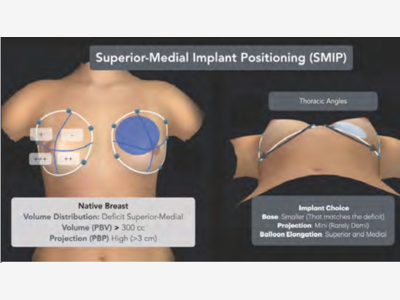
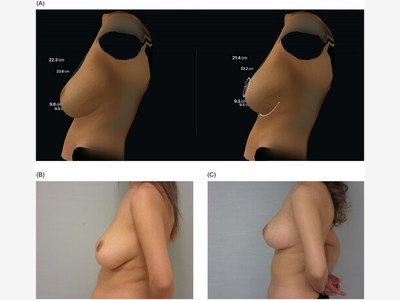
Retrospective Validation of a Tissue- Preserving Breast Augmentation Approach: From Native Tissue Geometry to Surgical Practice

Achieving natural and stable breast augmentation outcomes requires precise planning that accounts for each patient’s native anatomy. Combining 3D imaging with tissue-preserving techniques enables tailored implant positioning and controlled volume redistribution.


Manuel Chacon-Quiros, MD; Renee Burke, MD; Ashley Gordon, MD, FACS; Geovanny Herrera-Mora, MD; Jeffry Solis-Torres, MD; Pablo Solis-Chaves, MD; and Wouter van der Pot, MD (Aesthetic Surgery Journal, 2026)

Download

Der Einfluss von dreidimensionaler Simulations- und Virtual-Reality-Technologie auf die chirurgische Entscheidungsfindung und die postoperative Zufriedenheit in der ästhetischen Chirurgie: eine Vorstudie

Diese Studie untersucht, wie 3D-Simulation und Virtual-Reality-Technologien die Entscheidungsfindung und Zufriedenheit von Patienten bei verschiedenen ästhetischen Eingriffen beeinflussen. Mithilfe des Systems Crisalix Virtual Esthetics untersuchten die Autoren 75 Patientinnen und Patienten, die sich einer Rhinoplastik, Brustvergrößerung, Bruststraffung, Bruststraffung mit Vergrößerung oder Brustverkleinerung unterzogen. Die Ergebnisse zeigen, dass die 3D-Simulation besonders bei Brustvergrößerungen und Rhinoplastiken ausschlaggebend war und den Patientinnen und Patienten half, mögliche Ergebnisse zu visualisieren und Erwartungen realistisch einzuordnen. Bei der Nachuntersuchung nach einem Jahr gaben 70,7 % an, den Einsatz der 3D-Simulation weiterzuempfehlen – ein Beleg für ihren Wert als ergänzendes Instrument im Beratungsgespräch der ästhetischen Chirurgie.


Mert Ersan, MD; Hasan Demirbaşoğlu, MD; Begüm Kolcu, MD; und Hilal Aybüke Yıldız, MD (Computer Assisted Surgery, Januar 2026)

Download

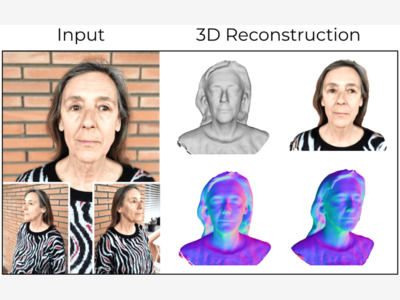
Fast and Accurate 3D Face Creation from Few Images

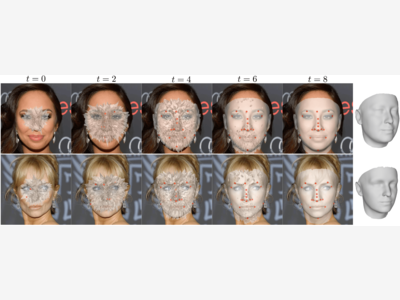
Our new paper, recently accepted at NeurIPS 2025, one of the world’s top-ranked scientific conferences, presents GLVD, an innovative method to create detailed 3D face models from just one or a few photos. Unlike traditional approaches that rely on fixed templates, GLVD combines artificial intelligence with smart geometry learning to produce more natural and expressive 3D faces quickly and efficiently. This method achieves top performance while drastically reducing computation time.


Pol Caselles (Crisalix SA and Institut de Robòtica i Informàtica Industrial, CSIC-UPC), Francesc Moreno-Noguer (Amazon). October 2025.

Download

Three-Dimensional Simulation Accuracy and Patient Satisfaction With Rhinoplasty

Achieving aesthetic satisfaction in patients undergoing rhinoplasty requires not only surgical precision but also effective communication of expected outcomes. Three-dimensional (3D) simulation has emerged as a promising tool for aligning patient expectations with surgical planning.


Kosaku Yamamichi, MD, PhD; Yuji Nakanishi, MD, PhD; and Chien Ying Chen, MD (Aesthetic Surgery Journal Open Forum, September 2025)

Download

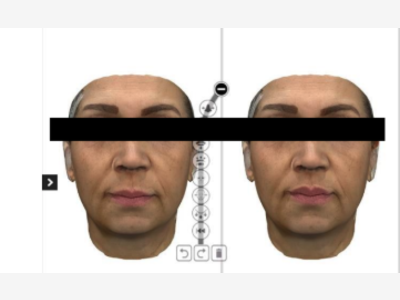
Diode Laser Reduces Post-Injection Edema After Juvéderm Ultra 3 Lip Augmentation: A Controlled Trial with 3D Evaluation

Post-filler edema can obscure aesthetic outcomes and affect patient satisfaction. This RCT investigates the effect of diode laser bio stimulation in reducing edema after Juvéderm Ultra 3 lip injections using 3D imaging.


Islam Kassem, Amira Khalid, Ahmed Shaban, Islam Amer.

Download

Implicit Shape and Appearance Priors for Few-Shot Full Head Reconstruction

This paper presents a novel approach to reconstructing full 3D head models from just a few images, addressing the common challenge of needing many input views and extensive computation. By incorporating shape and appearance priors—pre-learned information about the typical structure and visual features of human heads—the method achieves faster convergence, improved accuracy, and state-of-the-art reconstruction results.


Pol Caselles (Institut de Robòtica i Informàtica Industrial, CSIC-UPC, Barcelona, Spain, and Crisalix SA, Switzerland), Eduard Ramon (Crisalix SA, Switzerland), Jaime García (Crisalix SA, Switzerland), Gil Triginer (Crisalix SA, Switzerland), Francesc Moreno-Noguer (Institut de Robòtica i Informàtica Industrial, CSIC-UPC, Barcelona, Spain) (February 2025).

Download

Three-Dimensional Facial Evaluation of Facial Scars Management Using Pulsed Dye Laser: A Randomized Clinical Trial

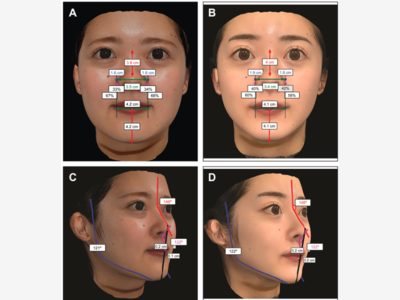
This study evaluates the efficacy of pulsed dye laser (PDL) therapy using the Candela Vbeam system for facial scar management, employing Crisalix 3D imaging to objectively assess scar parameters and monitor post-operative edema.


Islam Kassem, DDS, MSc, FDS RCSA, Department of Maxillofacial Surgery, Alamien Hospital, Egypt; Amr Youssef, MD, Department of Dermatology, sparkle, Egypt; Alshima Ahmed, PhD, Department of maxillofacial surgery Fayoum University, Egypt.

Download

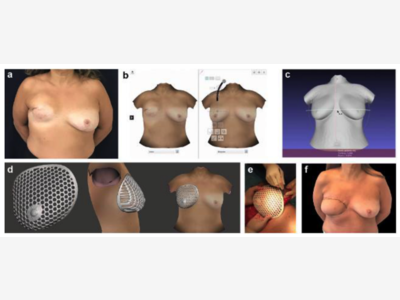
Three-Dimensional Printing in Breast Reconstruction: Current and Promising Applications

Three-dimensional (3D) printing is dramatically improving breast reconstruction by offering customized and precise interventions at various stages of the surgical process. In preoperative planning, 3D imaging techniques, such as computer-aided design, allow the creation of detailed breast models for surgical simulation, optimizing surgical outcomes and reducing complications. During surgery, 3D printing makes it possible to customize implants and precisely shape autologous tissue flaps with customized molds and scaffolds. This not only improves the aesthetic appearance, but also conforms to the patient’s natural anatomy.


H.F. Mayer, A. Coloccini, J.F. Viñas (Journal of Clinical Medicine, June 2024)

Download

Three-dimensional Simulation on Patient-reported Outcomes Following Oncoplastic and Reconstructive Surgery of the Breast

In this prospective study, we randomized 69 breast cancer patients undergoing breast-conserving surgery with oncoplastic or immediate-based reconstruction after mastectomy to receive 3D simulation of postoperative results (intervention group) or 3D imaging without simulation. The intervention group was more satisfied with preoperative information provided. Preoperative 3D simulation significantly improved patient satisfaction with information and did not decrease postoperative satisfaction with results.


Kurola et al. (PRS Global Open, May 2024).

Download
Aanmelden Aanmelden